I was an anxious patient for fifty years. Today, I am no longer one. Not because my anxiety has disappeared, but because this team took it seriously, without ever making a drama out of it.
Dentistry for Older Patients in Weißenfels
The essentials in 30 seconds
Who treats you
Dr. med. dent. M.Sc. Sandro Strößner – working in implantology since 2013 · M.Sc. in Oral Implantology and Periodontology – together with the team at Zahnkompetenzzentrum Weißenfels.
First Appointment
Conversation, medical history and examination (3D X-ray if needed) – planning comes first, treatment follows. A purely informational conversation without an examination is free of charge; examination and treatment and cost plan are billed according to the GOZ (the German scale of dental fees).
Costs
Before every treatment, you receive a written treatment and cost plan showing your own contribution; patients with statutory and private health insurance are treated equally.
First Step
Book an appointment around the clock via our online reception (the “Appointment” button), or by phone during opening hours on 03443 339 65 54.
“Dental care for older patients needs one thing above all: time. Time to talk, time to examine, time for sensitive treatment without any rush.”
Understanding before we act.
Cone-beam CT scan, intraoral scans, structured assessment. The first appointment isn't treatment — it's a conversation backed by data.

Digitally planned, thought through backwards.
From the final dental prosthesis back to the surgery. What should exist at the end determines the first step — not the other way round.

Minimally invasive, navigated.
Coordinated by one team under one roof. Surgery, prosthetics, laboratory — nothing handed off, nothing lost in translation.

Our Focus Areas — Dentistry for Older Patients & More.
For patients in need of care, we also organise mobile dental care and home visits in cooperation with local care facilities. We're happy to advise family members on the day-to-day handling of dentures, oral hygiene in dementia, and questions around nutrition.
Your questions — answered by us.
Short videos in which our team answers the questions we're asked most often. No jargon, no sales pressure.
The videos provide general information and do not replace individual advice or examination. The course and outcome of treatment depend on personal circumstances; medicine offers no guarantee of success. All videos have subtitles.
Dignity and Understanding
Dentistry for Older Patients – with Time, Patience and Respect
A long life leaves its mark – in the mouth, too. Teeth that have served well for decades often need particular attention in old age. At the same time, much of what surrounds this changes too: getting up may be harder than before, hearing or eyesight may decline, several medications may be part of daily life, and the journey to the practice may need careful planning. All of this is part of dentistry for older people – and we take it seriously.
At the Zahnkompetenzzentrum Dr. med. dent. M.Sc. Sandro Strößner in Weißenfels, we do not see dentistry for older people as "second-class" treatment, but as a particularly sensitive, attentive form of dental care. Older people have a long life behind them, in which they have achieved and experienced a great deal. They deserve treatment that respects their life experience, follows their pace, and sees them as people – not merely as a set of teeth.
Why age calls for its own approach to dentistry
The mouth of an older person is not simply “the same, just older”. Over the years, tooth structure, gums, saliva flow and the resilience of the whole body all change. General health conditions and medications that affect oral health are also often added into the mix. Good dental care for older people therefore always takes the whole person into account – their health, their circumstances and their wishes.
The way treatment is delivered matters just as much. Anyone with reduced hearing needs calm, clear speech and eye contact. Anyone who finds movement difficult needs time when sitting down and standing up, and a path free of obstacles. Anyone who is anxious or unsettled needs patience and the feeling of not being rushed. These small, human details often make the biggest difference.
What matters to us in treating older patients
- We take our time and don't rush anyone – neither in conversation nor during treatment.
- We speak clearly, at a calm pace, and in plain language, with no jargon.
- We listen, and take your wishes, concerns and personal circumstances into account in our planning.
- We pay attention to dignified treatment – everyone retains their right to self-determination.
- On request, we gently involve family members or carers.
- We plan treatments to be as gentle and as low-stress as possible.
In older age, oral health is far more than a question of good-looking teeth. It determines whether someone can bite into food heartily again, eat comfortably in company, speak clearly and laugh freely. It is closely linked to enjoyment, self-esteem and taking part in life. Teeth that function well, or dental prosthetics that fit well, help a person eat as they wish and feel comfortable in company. This is exactly what we want to preserve for as long as possible.
Typical Topics
Common complaints in later life – and what's behind them
In older age, certain problems in the mouth occur more often than in younger years. This is not a cause for concern, but a natural consequence of a long life and changing circumstances. What matters is recognising these changes early and managing them gently. We explain the most common issues to you, so that you know what to look out for – without any cause for alarm.
Dry mouth – when saliva production decreases
A dry mouth is one of the most common complaints in older age. Often, this is not due to age itself, but to medications that reduce saliva flow – many medicines for high blood pressure, water retention, depression, or allergies have this side effect. Saliva, however, is an important natural protection: it washes away food residue, keeps the oral mucosa moist, and supports the teeth. Without it, the risk of decay and inflammation increases, wearing a denture can become uncomfortable, and swallowing becomes more difficult. We will discuss with you what can help, and liaise with your GP if needed.
Root Caries – Decay at the Tooth Neck
Over the years, the gums often recede somewhat, exposing the sensitive tooth necks and root surfaces. This area is softer than the hard enamel of the crown and therefore more prone to decay. Combined with a dry mouth, or when cleaning becomes more difficult, a cavity can form here more easily. Root caries often progresses for a long time without pain and is therefore noticed late – a good reason for regular check-ups.
Periodontitis – Inflammation of the Tooth-Supporting Tissue
Periodontitis is an inflammation of the tissue that anchors the teeth in the jaw. It usually develops slowly and with little pain, but it can cause teeth to become loose. It is particularly common in older age and also interacts with various general health conditions. Gentle, regular care of the gums is therefore an important part of keeping your natural teeth for as long as possible, especially for older people.
Denture problems – when your dental restoration no longer fits
The jaw and gums change over time. A denture that used to fit well can become loose, rub or cause pressure sores after a few years. This is uncomfortable, can make eating more difficult, and can sometimes lead to sore patches. Much of this can be corrected well – through adjustment, relining or, if necessary, replacement. No one has to put up with an uncomfortable, ill-fitting denture.
Sensitive oral mucosa and other changes
The oral mucosa also becomes more sensitive and thinner over the years. Sore patches, fungal infections (particularly under dentures) or changes to the mucosa become more common. That is why, during dental check-ups, we look not only at the teeth but at the entire mouth. Should we notice anything, we will raise it gently and discuss the next steps with you calmly.
Arriving without obstacles
Accessibility and age-appropriate care at our practice
A visit to the dentist in older age does not begin only in the treatment chair, but already with the thought of getting there. Will I be able to get in easily? Will I have to climb stairs? Will I have enough time? Will people understand me? Such questions are understandable, and we want you to have to ask them as little as possible. Our aim is for you to feel well looked after with us right from the start.
A calm pace and genuine attention
In dentistry for older people, time is perhaps the most important “instrument” of all. We plan appointments so that no sense of hurry arises. You are welcome to sit down, settle in and take a breath, at your own pace. We explain every step before we carry it out, and make sure everything has been understood. If something is happening too quickly or is unclear, tell us at any time – we are happy to go over it again.
Consideration for hearing, sight and mobility
Many older people no longer hear or see as well as they used to. We pay attention to speaking clearly, maintaining eye contact, and taking time to discuss important matters calmly. If you wear a hearing aid, please feel free to let us know, so that we can adapt accordingly. We also take limited mobility into account: when sitting down and standing up, when positioning you in the treatment chair, and with breaks if lying down becomes uncomfortable.
Family members and companions are welcome
If it helps you to bring along someone you trust – a family member, a carer, or a good friend – that is naturally welcome. A companion can help with listening, remembering what was discussed, and the journey home. At the same time, we make sure that you yourself remain at the centre: decisions about your treatment are made by you, as far as you are able to. Your dignity and your right to self-determination come first for us.
What we pay special attention to in how we treat you
- We talk with you, not about you – even if someone is accompanying you.
- We take time for questions and answer them patiently, even if that means more than once.
- We make sure you're positioned comfortably, and take breaks if needed.
- We take how you're feeling on the day into account – some appointments work better in the morning, others later.
- On request, we coordinate with GPs, specialists and care staff.
- We also provide important information in writing, so nothing gets forgotten.
Some of our patients come from a care home, others are accompanied by their children or grandchildren, and others still come entirely independently. However different people's circumstances may be, we adapt to them just as individually. Simply tell us what you need to make your visit manageable – we will listen and find a way together.
Chewing well again
Dental restorations in later life – options that fit your lifestyle
Missing teeth, or teeth no longer worth preserving, can be replaced in various ways. Which dental prosthetics are right depends, in later life, on many things: how many teeth remain and which ones, the condition of the jaw and gums, general health, manual dexterity for cleaning, and, not least, your personal wishes. There is no single "right" solution – only the one that fits your life situation.
Fixed Dental Restorations – Crowns and Bridges
Individual damaged teeth can often be preserved with a crown, and smaller gaps can be closed with a bridge supported by the neighbouring teeth. Fixed dental restorations are not removed and feel particularly natural to many people. Whether they are suitable depends on whether enough load-bearing natural teeth are present and how well the area can be cleaned.
Removable Dental Restorations – Partial and Full Dentures
If several or all teeth are missing, removable dentures are often an option. A partial denture replaces individual teeth and uses the remaining teeth for support, while a full denture replaces an entire jaw. Removable dentures have the advantage that they can easily be taken out for cleaning – which can be particularly practical when oral care is more difficult or is supported by another person.
Implant-supported dental restorations – more stability for a loose denture
If a denture in the lower jaw does not hold well, implant-supported retention can provide more stability. Artificial roots are placed, to which the denture is then attached. This can make eating and speaking easier and improve wearing comfort. Whether such a procedure is sensible and possible in an individual case depends heavily on general health, the available bone, and your preferences. We advise you honestly on whether this could be a sensible option for you, or whether a simpler approach would suit you better.
What factors into the decision
- How well you can clean dental prosthetics yourself, or whether support is needed
- Whether a procedure is something your health can cope with, or whether gentler solutions make more sense
- How important appearance, comfort while chewing and the feel of wearing it are to you
- What level of burden – including in terms of time and money – is manageable for you
- Whether an existing restoration should be repaired, adjusted or replaced
It matters to us that a solution is not just “medically feasible”, but genuinely fits your life. An elaborate restoration that is difficult to care for in everyday life helps no one. Sometimes the simpler, more robust solution is the better one. We weigh this up together with you and never decide over your head.
Treating you safely
Pre-existing conditions and medication – why we ask in detail
Over the years, many people live with one or more underlying medical conditions – such as heart and circulatory conditions, diabetes, bone diseases, or complaints requiring long-term medication. For safe dental treatment, it is important that we know about these. That is why, before every treatment, we carefully ask about your medical history and your medication. These questions are not a matter of distrust, but of genuine care taken for your protection.
Why the medication list matters so much
Some medications can affect dental treatment. Blood-thinning medicines, for example, are relevant for procedures where bleeding may occur. Certain bone medications need to be known about before any procedure on the jaw. Many medicines reduce saliva flow and so encourage dry mouth. So that we can take all of this into account, please bring your current medication list with you – this is the simplest and safest solution.
Coordination with your treating doctors
In the case of certain pre-existing conditions or medications, we liaise with your GP or specialists before a procedure. This ensures that dental treatment fits well within your overall care and that nothing is overlooked. This coordination between those treating you is an important safety measure, particularly in older age, and we take it very seriously.
Gentle, well-plannable treatment steps
We plan treatment for older people so that it is as undemanding as possible. This can mean splitting larger procedures into several shorter appointments, allowing for breaks, or choosing a particularly gentle approach. If necessary, we pay attention to the right time of day or a time that fits well with your medication schedule. What makes sense in an individual case is something we discuss with you personally.
You can rely on us not to rush anything. Before planning any procedure, we weigh up what will genuinely help you and what can reasonably be asked of you. Not everything that is technically possible is also sensible – and sometimes a cautious, watch-and-wait approach is the wiser choice. For us, this honest weighing-up is part of good dental care for older people.
Everyday Care
Oral care in old age and when in need of nursing care
Good daily oral care is the best prevention – at any age. In later life, however, it can sometimes become more difficult: when the hands are no longer as dexterous, strength declines, eyesight worsens, or an illness limits mobility. At that point, it is right and sensible to seek support. Oral care is not something you "have to manage alone" – it is a piece of quality of life that is worth every effort.
Aids that make care easier
There are many small aids that make daily cleaning easier. An electric toothbrush takes over part of the work and is often easier to handle. Toothbrushes with a thick handle are easier to hold if your hands are less steady. Interdental brushes are available in various sizes for the spaces between teeth. We are happy to show you specifically which aids would suit you.
Caring for Dental Restorations
Removable dentures also need daily cleaning – ideally over a washbasin filled with water, so that nothing breaks if the denture slips out of your hand. The mouth itself also needs care while the denture is out. At check-ups, we look at how well cleaning is going and give practical tips that are genuinely easy to put into practice in everyday life.
When care is provided by others
When someone needs care, relatives or carers often take on part of their oral care. This is a valuable, and sometimes challenging, task. We are happy to explain what matters, and to include carers in the consultation if desired. Regular, careful oral care contributes not only to oral health, but also to the general wellbeing and dignity of the person being cared for.
Practical tips for everyday life
- Clean teeth and dental restorations thoroughly, ideally twice a day.
- If your mouth feels dry, take small sips of water regularly, and ask us what else might help.
- Clean removable dental prosthetics over water, so they don't break if dropped.
- Clean between your teeth with suitable interdental brushes, where you can manage it.
- Watch out for pressure points, sore spots or other changes, and mention them to us.
- Attend regular check-ups – even if you have no symptoms.
Please do not hesitate to tell us about seemingly small things too: that a denture presses slightly, that brushing is becoming difficult, or that your sense of taste has changed. Observations like these are exactly what help us step in early, before a small issue becomes a bigger problem. We listen and take every concern seriously.
Cared for close to home
Your visit to us in Weißenfels – process and costs
For a dental visit in later life to go well, predictability helps. When you know what to expect, the appointment feels easier. That's why we show you how a considerate appointment with us unfolds – entirely at your own pace, with time for questions and without any feeling of being rushed.
- Booking an appointment with consideration for you: you can reach us on 03443 339 65 54. Feel free to tell us what you need – whether that's more time, a particular time of day, or information about accessibility. We will accommodate this.
- Arriving without any rush: At your appointment, you can take your time to arrive, sit down and take a breath. A companion is welcome.
- Conversation and medical history: We listen, and ask about your symptoms, wishes, pre-existing conditions and medications. Feel free to bring your medication schedule along for this.
- Gentle examination: We take a careful look at your teeth, gums, oral mucosa and – if present – your dental prosthetics, and explain what we see.
- Planning together: Based on the findings, we discuss possible steps and which solution fits your health, your everyday life and your wishes.
- You decide at your own pace: you don't have to commit to anything straight away. We explain important information clearly and, on request, also provide it to you in writing.
Many older patients find it reassuring that nothing is rushed with us. You may ask questions as often as you like, and take your time to think things over at home too. If something else occurs to you along the way, just give us a call – that's what we're here for.
Costs and Coverage
The costs you will face depend on the treatment needed and the option chosen. For patients with statutory health insurance, many dental services are billed under the insurer's scale of benefits. For dental prosthetics, there is a fixed subsidy from the statutory health insurer, which can increase with the bonus booklet; an out-of-pocket share may apply for higher-value treatment. Certain additional services are private services. Before more extensive treatment, you will receive a clear, written treatment and cost plan, so that you have full transparency and no later surprises. Privately insured patients and those entitled to Beihilfe should clarify the extent of reimbursement with their insurer in advance. If the financial burden is a concern, please feel free to talk to us openly – we will explain each item calmly and without jargon, and work with you to find a manageable way forward.
Here for you in Weißenfels and the region
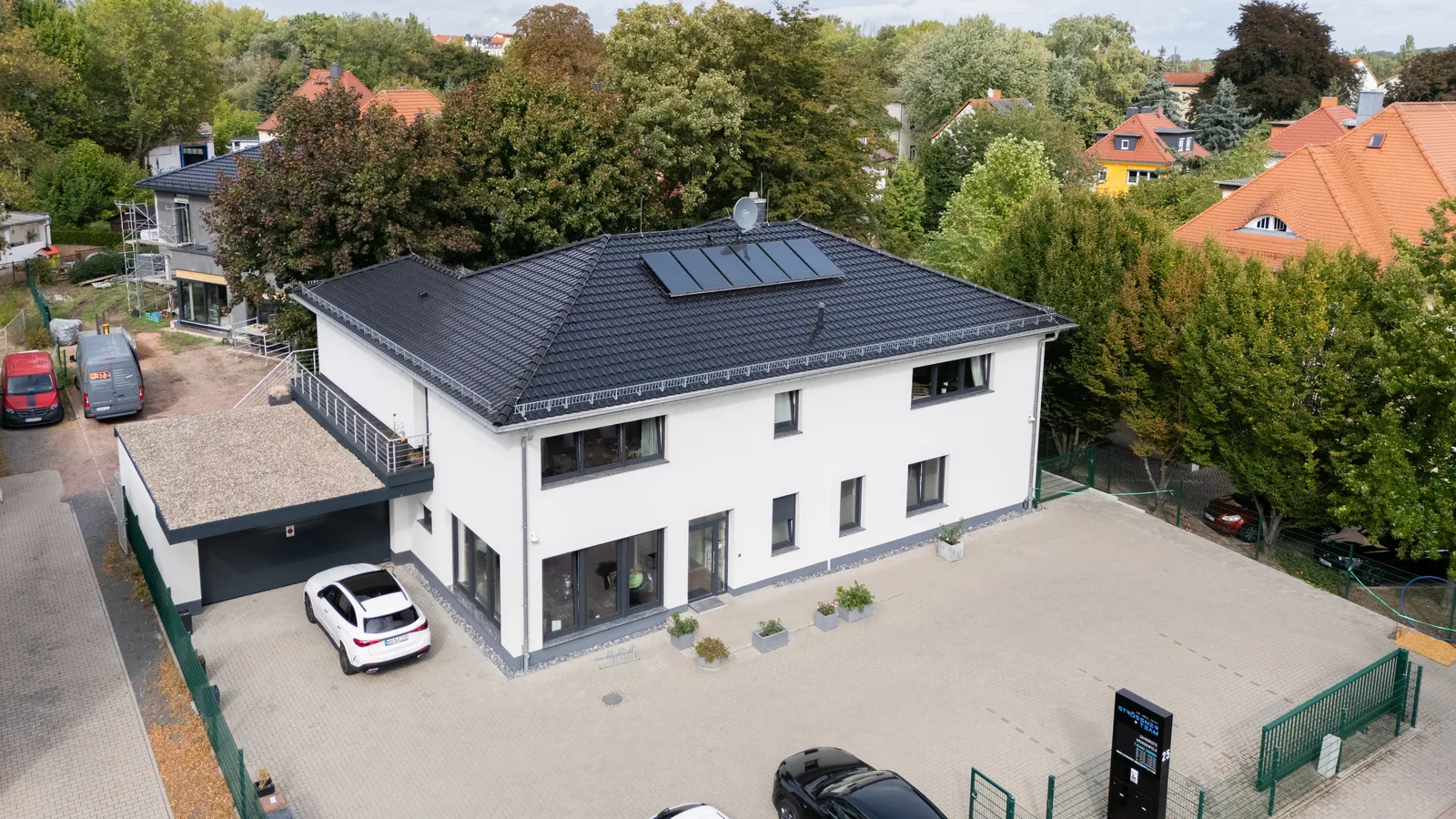
The Zahnkompetenzzentrum Dr. med. dent. M.Sc. Sandro Strößner in Weißenfels is here for you – close to home for older people from the town and the whole surrounding area of the Burgenlandkreis. Especially as getting around becomes more difficult, having a point of contact nearby is valuable. If you would like to book an appointment or simply ask a question, you can reach us on 03443 339 65 54. We will take the time for you.
With time, experience and empathy for older patients
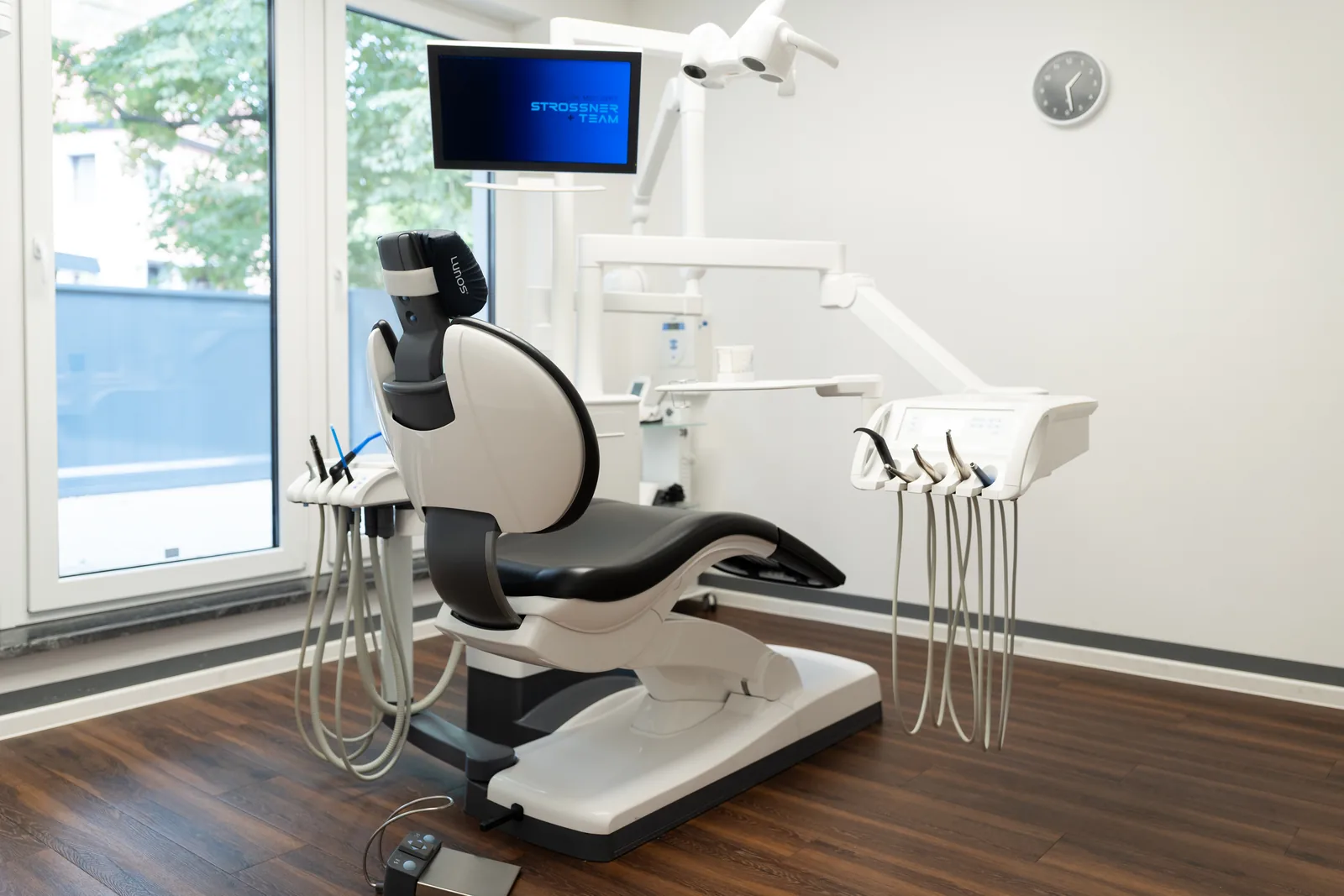
Dental care for older patients needs, above all, one thing: time. Time to talk, time for the examination, time for considerate treatment without any rush. Our Zahnkompetenzzentrum is set up for the particular needs of geriatric dentistry – from a fully accessible practice through to home visits in care homes.
Many older patients suffer from dry mouth (caused by medication), reduced muscle strength for oral hygiene, poorly fitting dentures, pressure sores, or unsatisfactory chewing ability. We have proven concepts for all of these situations – including implant-supported dentures that sit securely, while still being removable.
Voices that have stayed.
What convinced me was the absence of marketing. No promises. Just planning, explanation, execution. I had eight implants placed and didn't even feel like I'd made a difficult decision.
Questions, answered calmly.
At the Zahnkompetenzzentrum